

Turning a hobby into a business is exciting, but it can also feel risky and overwhelming. If people already buy your arts and crafts online, at shows, or as friends and family, you’re not starting from scratch. You’re already building something real, even if it doesn’t feel official yet.
Most makers don’t suddenly feel “ready.” They grow into it. This guide outlines the key signs to look for, the steps to take, and how to safeguard your growing business from common risks as you transition from hobbyist to full-time creative business owner.
Why Creatives Are Afraid To Go Full-Time
Many creators feel nervous about making the switch to full-time work because of concerns about financial stability. A survey by Flexjobs found that 41% of full-time employees consider quitting their current 9-to-5’s for side hustles. Over half of respondents said they’d need to make at least 75% of their current salary before taking that leap.
Meanwhile, 40% of creatives say their main barriers to growth are the fees and expenses weighing down their budget. But it’s not all finances. Fear of failure, confusing business logistics, burnout, and the reality of juggling a side gig that already takes full-time energy all add pressure.
The “perfect moment” only shows up once you take that step forward with careful planning, leaving the “what ifs” to tools like art business insurance that help manage those risks.
How to Tell If Your Craft Is Ready to Become a Real Business
Are you selling your artwork at local festivals or online? If the answer is “yes,” then you’re already on the path from hobby to business. Some of the signs that help you know when to go full-time with a side hustle are:
✔️ Your customers come back to you, whether they recognize you at shows or put in repeat orders for your products
✔️ You have steady sales throughout the year, and not just sudden bursts around the holidays
✔️ You know your basic costs (materials, booth fees, packaging) and price your work to cover them
✔️ You can predict your income at least a little, like how much you’ll make at an upcoming festival or your monthly online sales
✔️ You have more demand than you can meet part-time, and fulfilling those orders keeps nudging you towards bigger ambitions
✔️ You’re spending money to make money and investing your sales back into your tools and craft supplies
Get Inspired With Real Life Maker Success Stories

The Moment Jennifer Realized Her Hobby Was a Real Business
After losing her job as a designer in 2019, Jennifer felt defeated. Months of applying led nowhere, and many employers wouldn’t accommodate her chronic health needs. She needed a career that supported her well-being, so she left corporate life to grow her freelance business into her lifelong dream: Forged Flare, a handmade ornament business.
Jennifer says the biggest shift from hobbyist to professional is understanding that, “A hobbyist makes things they personally enjoy… but for a professional, the focus shifts completely. It becomes entirely about the customer experience from start to finish, and not just the product.” As her business grew, so did the responsibilities. “A full-time creative spends about 80% of their time on marketing, admin, and daily operations, and maybe 20% actually making the product.”
Freelancing felt like her safety net, but eventually, she couldn’t provide clients the attention they needed while building a sustainable business. Letting go of freelance work made room for Forged Flare to thrive. “I knew I had something special, but I also knew I had to approach it as a business, not a hobby. I wasn’t my own customer.”
She stresses that going full-time is rewarding but demanding. “Days can be super long… some days you fall out of love with what you do… it’s a whirlwind of ups, downs, feelings and emotions — 24/7!” She also warns makers to be financially ready for slow seasons and economic swings.
Before jumping in, she suggests asking yourself: Are you mentally ready? Are you financially prepared? Are you willing to shift from maker to business owner and spend most of your time on non-creative work?
Nearly six years later, Jennifer says, “It’s been the best decision I’ve ever made, and I hope your journey is just as fulfilling.”
~ Jennifer Street, founder and creative director at Forged Flare
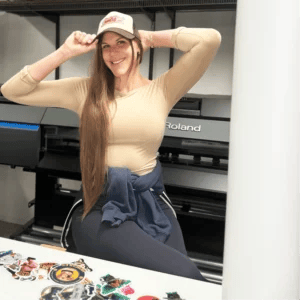
Therese’s Story: Turning Stickers Into a Scalable, Full-Time Business
When the COVID-19 pandemic hit, Therese Waechter was 20 weeks pregnant and was suddenly laid off. Instead of waiting for things to get better, she used the unexpected time to build what would become Otto’s Grotto, a woman-owned sticker and novelty print shop. What began as a solo side hustle quickly grew into a multi-channel business, reaching annual six-figure revenue.
Therese started with minimal equipment. “My first setup was the smallest commercial printer available, a hand-laminator from Amazon, and the smallest commercial cutter offered. Now I use the biggest of everything.” Scaling her operations became essential as demand grew, and she learned early that success meant thinking differently about production. “Just because something starts out fully handmade doesn’t mean every part of it has to stay that way.” She encourages makers to look for the bottlenecks they can remove through outsourcing, better tools, or more efficient processes while still preserving quality.
Another lesson she stresses is protecting your creative work. “If you’re doing design-driven work, avoid the trap of using IP you don’t truly own or have rights to.” For Therese, treating her designs as assets was transformational. “Owning your IP is what turns a side hustle into a real, sellable business.”
Today, Otto’s Grotto continues to grow, and Therese credits her success to embracing scalability and safeguarding her creative rights from day one.
~ Therese Waechter, owner of Otto’s Grotto
The 5 Steps to Turning A Hobby Into a Business
We’ve already outlined the steps to start a handmade business in more detail, but turning your part-time hobby into a career requires a strong foundation. The following five steps show you what that foundation looks like and when to get started:
1. Create Your Business Plan
A business plan puts your dream on paper, showing you what going full-time really looks like. If you need funding, especially if you’re switching careers, lenders typically require a business plan as part of the application process. Your plan should outline:
- What you sell
- Who you serve
- How you’ll market your work
- Your pricing and expected earnings
- Your business structure
- Your business goals
- Your Certificate of Insurance (COI)
It doesn’t need to be perfect — it just needs to exist. To give you a head start, we created this guide on how to create a business plan that includes a free downloadable template.
2. Track Your Cash Flow
Cash flow means how much money goes into your business (sales or loans) and how much money goes out (cost of supplies or booth fees).
Tracking your cash flow now helps you determine how much longer you’ll need supplemental income from another job. It also answers questions like, “How do I know if I’m making a profit?” or “How much should I save before going full-time?” (Spoiler alert: most makers aim for a 3–6 month cushion for basic expenses.)
You don’t need to map your finances with the precision of a Fibonacci spiral. Tools like QuickBooks or Xero handle the numbers for you and make cash flow easier to manage.
3. Build Your Safety Net with Insurance
The best time to get your handmade business insured is the moment you start selling online or in person. Insurance becomes your safety net, filling the gap of uncertainty that appears when you trade a steady paycheck for a creative career with more purpose.
Whether you sell part-time or full-time, handmade insurance helps you qualify for craft shows, build customer trust, and protect your personal finances.
Many hobbyists start with event coverage like ACT Go, but full-time makers usually need the year-round protection of ACT Pro. If you’re unsure which fits your work, this guide on event vs. annual insurance can help you decide.
💡Did you know? When you own a business, you can often deduct necessary expenses like craft liability insurance from your taxes.
4. Ask for Advice
The creative community is your safe space to ask questions, fail forward, and make friends who positively impact your business and your creativity.
Remember: other creative business owners have been where you are now, making them the most qualified to get judgment-free advice. Connect with other vendors at your next craft show or join a relevant Facebook group to find helpful tips and resources.
Your local Chamber of Commerce is also an excellent resource for business advice, especially when it comes to legal or financial questions.
5. Keep Learning, Keep Growing
Every masterpiece started as a rough sketch, shaped over time into something remarkable. When you go full-time, what you’re really doing is building sustainability piece by piece. When you stay curious and learn from your mistakes, you set yourself up for long-term success.
The more you learn, the easier it becomes to worry less about risks and scale your business. You’re already moving in the right direction by reading this guide, and you can explore more business advice and support on the ACT blog.

What Changes When You Own A Creative Business
Business logistics feel less intimidating when you consider the thousands of makers who figure them out every year. When it’s your turn to take that step, here are the key changes to expect:
- Managing your time: More than half of small business owners work 50+ hours a week. Learning how to prioritize tasks and set boundaries helps you avoid burnout.
- Getting a business license: Most full-time creatives who sell regularly need a business license to operate legally and pay taxes. Visit the Small Business Administration’s website to learn more.
- Obtaining a sales tax permit: Most states consider handmade products taxable, so you’ll likely need a sales tax permit to collect and report sales tax on your products.
- Filing taxes: Going from hobbyist to business owner changes your tax status, from writing off business expenses to filing the right forms for your business structure.
- Covering bigger risks: When selling your creations becomes your primary source of income, ACT Pro provides the full-time protection you need wherever you sell your art.
- Meeting event requirements: You’ll have more time in your schedule to attend events locally or in other cities and states. It’s crucial you have the right vendor insurance to meet various venue and state requirements.
You’re More Ready Than You Think
Turning a hobby into a business takes time. The more you learn about your craft, your audience, and the basics of running a business, the clearer that path becomes. When you’re ready to take the next step, ACT is here with affordable, reliable coverage to help you grow with confidence.
FAQs About How to Turn Your Hobby Into a Business
How much can you make as a hobby before paying taxes?
According to the IRS, you must report all income from selling handmade goods, even if it’s only a hobby. The IRS requires hobby income to be reported as “Other Income” on Form 1040, and hobby expenses cannot be deducted.
If you earn more than $600 through online platforms or payment apps, you’ll also receive a Form 1099-K and must include it in your tax return.
At what point is a hobby a business?
A hobby becomes a business when you operate it with the intent to make a profit. The IRS looks at several factors, including:
- How much time and effort you invest
- Whether you rely on the income
- Your knowledge or access to expert guidance
- Your expectation of future profit
- Whether losses are normal for a startup or beyond your control
If your goal is to earn money, the IRS is likely to classify your hobby as a business.
Do I need to register my hobby as a business?
You’ll need to register your hobby as a business once you’re making a profit. Registration protects you from penalties and allows you to deduct business expenses. Most makers register as a sole proprietorship or LLC, then apply for the required local or state business licenses and a sales tax permit.
Do I need insurance if I sell occasionally at craft fairs?
Yes. Even occasional vendors need event or vendor insurance. Most craft fairs require proof of insurance before you can set up your booth. Insurance also protects you if a customer is injured in your space or if you accidentally damage the venue’s property.
How much is liability insurance for a small handmade business?
Liability insurance for a handmade business starts at $24.45 per month with ACT Pro, which covers both online and in-person sales year-round. Get a free quote and discover affordable coverage designed specifically for creative businesses.
