
Your creativity is boundless, but sometimes, it can feel like you’ve hit a wall when it comes to finding new customers. If you want to get more of your handmade products out into the world, try these tips today.
Creator Toolkit: You’ve got specialty tools, brushes, and media to create cool things. But do you have crafters insurance in your kit? This coverage protects you while you share and sell your creations in case of accidents related to your business. 10/10, recommend.
The Challenges of Craft Business Marketing
First things first: you’re not alone in facing these challenges. It’s common for creative entrepreneurs to struggle with making sales outside of the same markets. And let’s be real, you probably don’t want to ask your loved ones to check out your latest drop to boost visibility. Again.
Here are some common issues you might relate to:
- Inconsistent or seasonal sales cycles: You might see a surge during the holidays and barely a trickle of sales in other seasons, so it can be difficult to stay motivated throughout the year.
- Limited time and marketing know-how: It’s natural to want to focus your efforts on creating — rather than on the business side of things — but to find new customers, you need to put equal energy into both making and marketing.
- Competition against mass-produced products: Consumers are enticed by the endless number of products online, so your arts and crafts goods need to stand out from the soulless, mass-produced stuff that’s out there.
- Fear of being too “salesy”: Embarrassed about self-promotion? Everyone feels that way, but the truth is your products aren’t going to sell themselves. You have to get comfortable with championing your business — no one else will!
Whatever business “ugh” you’re dealing with, the approaches in the next section can help you build your customer base. See what works for you!
7 Tips: How to Sell More at Craft Fairs and Beyond
New product line? ✅
Motivation to find new customers? ✅
Craft fair marketing ideas to try this week? All right here.
1. Offer a “Customization Station”
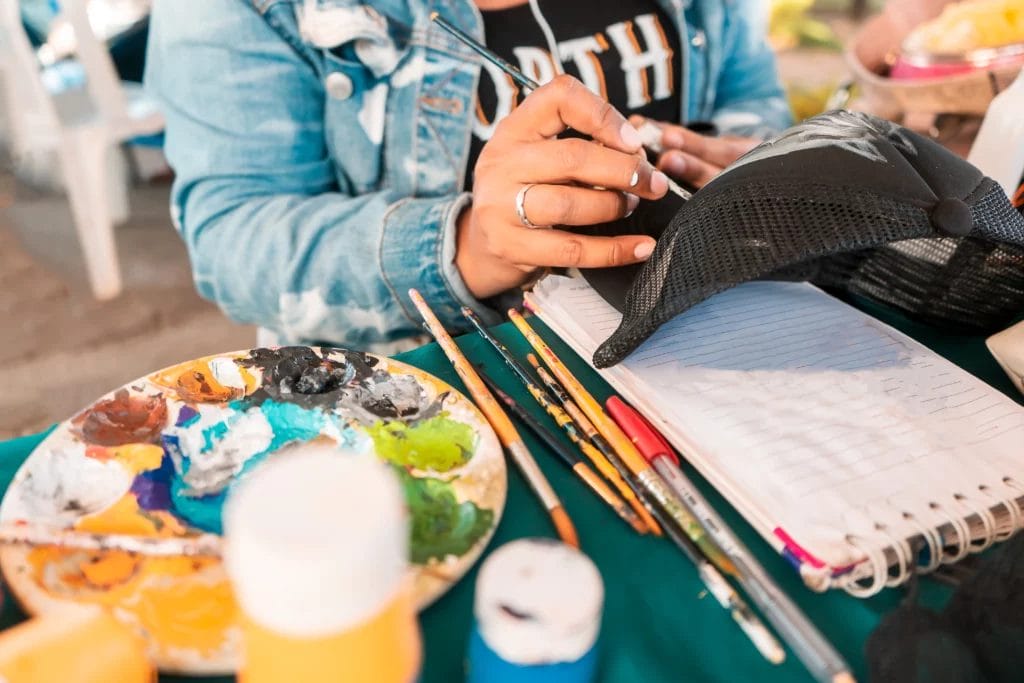
At your next event, set up a “customization station” for customers to add unique finishing touches to products. Personalization helps people feel like a product is truly their own and not just another item on a shelf.
This also makes the buying experience interactive and memorable. Imagine the story your customer will share when they show off your product: “I got to add this design detail, and it was so fun!”
How to Do It: Bring tools and supplies to events so buyers can tweak colors, add initials, or choose packaging or framing. Add an upcharge for the service, presenting it as an opportunity to participate in the creative experience.
2. Use Social Media Intentionally
There’s no need to burn yourself out posting on every social media platform. Pick one channel where your audience already engages and focus on building authentic connections.
The point of building your online presence isn’t to sell, sell, sell. It’s to show your customer base who you are and why they should care about your products. An often overlooked aspect of this is bringing your audience along for the artistic journey.
For example, imagine polling your followers on what product idea you should create next. Then, based on their feedback, share every part of the process with them — ideation, creation, failure, perfecting the product, and finally, releasing it.
Tell the story and allow your audience to emotionally invest in your business so they’re more likely to purchase when it comes time.
How to Do It: Create a social media calendar for the next month and post consistently (but thoughtfully) on the platform of your choice.
Artist Social Media Post Ideas
- Story time about why you create art
- Behind-the-scenes look at art fair prep
- Time-lapse of a product being made
- Invite the audience to vote on your next product
- Highlight where your local or sustainable materials come from
- Inspiration or personal story behind a product
- Share pieces that didn’t turn out quite right
- Sneak peeks at new products

3. Collaborate With Other Makers
Do you feel like you’re competing with other artists in a crowded market? Use that to your advantage! Team up with crafters who make products complementary to yours to provide bundles or reciprocal discounts.
For example, if you create cottagecore-inspired paper goods, you might collaborate with another vendor who sells crochet products or a food business selling fruit jams. Your ideal client is the same person, so use your shared product “aesthetic” to secure more sales collectively.
How to Do It: Reach out to other makers whose products align with your business. Propose a product bundle, reciprocal discount, or shared event. Split profits fairly according to each business’ contributions.
4. Tap Into Your Community
If you’re looking to grow your handmade business, consider expanding beyond the usual craft markets. Partner with local brick-and-mortar businesses to host mini pop-up events or sell your products on consignment.
Try contacting local businesses like:
- Cafes
- Coffee shops
- Clothing boutiques
- Art and craft studios
- Plant stores
- Craft stores
- Gift shops
- Bakeries
How to Do It: Connect with businesses in your area to see if they’d be interested in working with you. It’s a great sign if they already offer shelf space to local artists, but keep your options open!
Here’s a sample message you can personalize.
Hi [Business Name],
I love your shop and was wondering if you’d be open to either hosting a small pop-up event or carrying some local handmade arts and crafts on consignment. I think my products could be a great fit for your space and bring in something fresh for your customers! Would you be open to chatting about this?
Best,
[Your Name]
5. Partner With Micro-Influencers
Did you know 69% of consumers trust the words of influencers, friends, and family over information directly from a brand? People follow influencers on social media because they enjoy their aspirational content and want to see what products they genuinely like.
Not every growing crafts business has the budget for influencer marketing, but what you can do this week is send samples to local lifestyle creators. Aim for people with follower counts in the 1K to 5K range who already post about home decor, style, or handmade goods.
These creators often have more loyal, engaged audiences, and many are willing to collaborate with you for free products. Wow them and win over their audiences, too.
How to Do It: Reach out to local micro-influencers and ask if they’d be interested in sharing your products online if you send them a package. You can even suggest specific story angles for them, like “unboxing a handmade gift set for my BFF.”
6. Leverage Word-of-Mouth Referrals
You don’t want your happy customers to keep their thoughts to themselves. Offer a simple incentive to prompt them to share how much they love your products.
Whenever you make a sale, include a small branded card encouraging customers to tell their friends how impressed they are with your creations.
- “Bring a friend, get 10% off your next purchase.”
- “Share a post, tagging my business, and get entered to win a free item.”
- “Free stickers for you and your friend when you buy at my next event.”
- “Refer a new customer, and we’ll donate a portion of the purchase to our local charity.”
How to Do It: Choose a referral system that works for your business, design a card to promote it, and start implementing it at your next event. Track referrals in a spreadsheet, use unique codes, or take advantage of your POS (point of sale) software’s referral features.
7. Display Your Insurance Badge
What’s the simplest way to boost your credibility and get more customers? Displaying your insurance badge! Customers can be hesitant to purchase from small craft vendors because they worry about product safety or legitimacy.
If you carry liability insurance, display your insurance badge prominently at your booth, on your website, and in your social media profile. This visual cue reassures customers that you’re serious about your craft and that their purchase is low-risk!
How to Do It: For your next event, print out your insurance badge and present it in a brand-aligned frame at the entrance of your booth. Also, feature it on your website, social media, and emails, too!

Protecting Your Growing Handmade Business
Now that you know how to market your craft business, protect it! We mentioned displaying your insurance badge as the last tip, but if you aren’t already covered, you can check off this step in under 10 minutes with ACT Insurance.
ACT offers craft fair insurance through two policies, ACT Pro and ACT Go — both with affordable, top-rated coverage that keeps up with your creativity.
- 365 days of continuous coverage
- General + product liability insurance
- Multiple optional coverages available
- From $24.25/month
- 1-3, 7, or 90 days of coverage
- General liability insurance
- Optional Theft & Damage Coverage
- From $49/event
Learn more about one-day vs. annual artist and crafter insurance.
FAQs About Craft Vendor Marketing
What Marketing Works Best for Craft Vendors?
Story-driven marketing works best for craft vendors — showing the process, materials, and personal story behind your craft — whether in person or on social media platforms.
Do I Need Insurance to Sell at Craft Fairs?
Many craft fairs require vendors to carry vendor liability insurance to protect both the organizer and the seller. Even if it’s not required for vendor approval, insurance signals your professionalism to customers and protects you if an accident happens at your booth.
How Do I Collect Emails at a Craft Show?
To collect emails at a craft show, offer a small incentive. Use a simple sign-up sheet, QR code, or tablet form at your booth in exchange for rewards like a discount on a future purchase, a giveaway entry, or an exclusive look at new product drops.
Keep it quick and hassle-free to motivate customers to join your email list.

Julis Navarro | Copywriter
Seattle-based copywriter and licensed insurance agent Julis Navarro leverages her experience in creative arts and holds a bachelor’s degree in journalism from Pepperdine University. Before working at Veracity, she wrote product and editorial copy, ranging from craft supply descriptions to trending style curations, for online retailer Zulily. Fully trained on ACT Insurance coverage, Julis now writes to help match creative professionals with their perfect insurance policies.
Seattle-based copywriter and licensed insurance agent Julis Navarro leverages her experience in creative arts and holds a bachelor’s degree in journalism from Pepperdine University. Before working at Veracity, she wrote product and editorial copy, ranging from craft supply descriptions to trending style curations, for online retailer Zulily. Fully trained on ACT Insurance coverage, Julis now writes to help match creative professionals with their perfect insurance policies.
